
Academic Research Interconnect Case Study
UC San Diego Lim Lab Sensor Board Interconnect for Compact, High Flex Applications
A UC San Diego neurobiology research team in the Lim Lab develops tools and experiments to study basal ganglia circuitry and behavior using approaches such as in vivo recording and optogenetics in mice.
To support a custom research instrument, the team needed a reliable interconnect to link a main electronics board to a sensor board in a tight mechanical envelope.
The challenge
The research team contacted PICA looking for an interconnect solution that could handle three competing requirements:
- Slim, low profile packaging to fit within a compact assembly
- High density routing in a narrow flex width
- Continuous flexing during operation, requiring long term mechanical reliability
Off the shelf cabling and rigid interconnect options risked adding bulk, limiting routing density, or failing under repeated bending.
PICA’s engineering approach
PICA reviewed the application details and identified flexibility and mechanical endurance as primary drivers, alongside routing density and overall profile. The solution required material and process choices designed to preserve flex performance while meeting electrical and assembly needs.
The solution
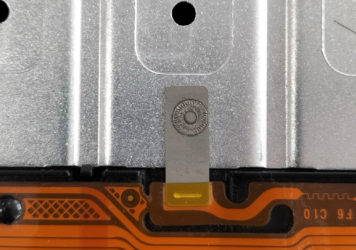
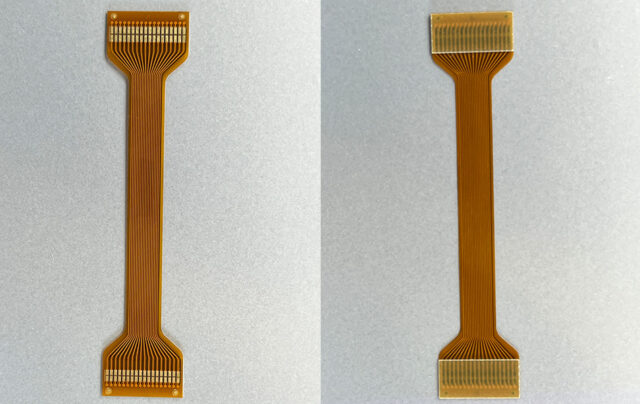
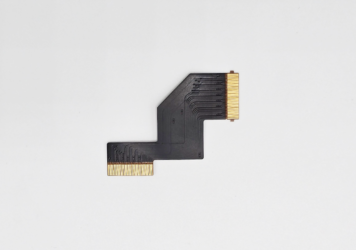
PICA delivered a double sided flexible printed circuit that accommodated the full routing set while maintaining a narrow width and low profile.
Key design and fabrication elements included:
- Double sided flexible printed circuit to support high density routing in a slim form factor
- Rolled annealed copper on an adhesiveless base laminate to improve bend performance during continuous flexing
- Button plating selected to help preserve flexibility while meeting interconnect requirements
- Turnkey build support including design, flex fabrication, and assembly of the two board connectors
What PICA delivered
- Engineering review and design support based on the application constraints
- Fabricated flexible printed circuits built for repeated bend use
- Assembled connector interfaces for main board and sensor board integration
- A turnkey interconnect solution to reduce lab integration time and simplify procurement
Outcome and impact
With a purpose built flex interconnect, the research team received a compact, high density, low profile link between boards that was designed specifically for continuous bending during operation. This supported faster integration into their research hardware and improved confidence in mechanical reliability for ongoing experimentation.
Why it matters for academic programs
Academic research hardware often combines tight mechanical packaging, custom sensing, and frequent handling or motion. The Lim Lab’s work focuses on understanding neural circuits and behavior in animal models, which commonly depends on compact instrumentation and dependable signal pathways.
PICA helps bridge the gap between lab prototypes and buildable, repeatable interconnect solutions through practical engineering support and turnkey execution.
The blogs featured below expand on this page’s content, offering detailed insights into specific design, manufacturing, and application topics that provide added relevance and deeper context for engineers and decision-makers.
CES 2026 Highlights: The Breakthrough Technologies Powered by Advanced Flex & PCB Design
Las Vegas, January 2026 — CES 2026 once again confirmed that the pace of innovation in consumer tech, mobility,...
What Is Box Build Assembly? Process, Benefits & How to Choose a Manufacturer
Box build assembly—sometimes called systems integration—involves assembling a complete electronic product by combining a finished PCBA with...
Designing PCBs for Medical Devices: Key Considerations & Compliance Tips
PCB design for medical electronics demands more than just electrical functionality. Devices must meet...
What to Look for in a Manufacturing Company in Malaysia
When evaluating a manufacturing company in Malaysia, most teams are focused on a few essentials: capability fit, reliable quality systems,...