Printed Circuit Board

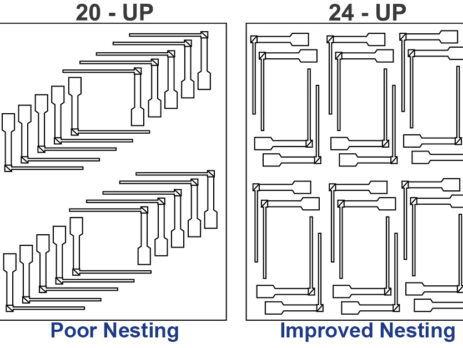
Printed Circuit Board (PCB) Stencil Design: Key Characteristics & Best Practices

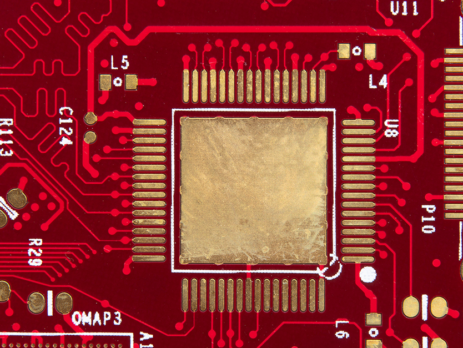
Stencil design plays a critical role in ensuring the quality and reliability of printed circuit boards (PCBs). A well-designed stencil enables precise solder paste deposition, ensuring strong solder joints and high manufacturing yields. With over 30 years of experience and facilities in Derry, NH, and Kuala Lumpur, Malaysia, PICA...

Compliance: Ensuring Safety and Performance in Flexible Printed Circuit Manufacturing

When developing and manufacturing flexible printed circuits (FPCs), adhering to industry standards ensures reliability, safety, and performance. Two pivotal standards in the FPC industry are UL 796 and IPC 6013. While both standards guide the design and production of printed circuit boards, their focuses and requirements differ significantly, impacting...

Electrical Verification Protocols Part #2: Functional Testing of Complete Circuit Assemblies

Part #2: Functional Testing of Complete Circuit AssembliesIntroductionIn the second part of our series, we delve into the verification processes for circuitry once components are mounted. This phase is crucial for assessing the functional integration and overall performance of our PCBs and FPCs. Through a series of targeted tests, we...

Electrical Verification Protocols: Preliminary Testing of Unpopulated Circuit Boards

Welcome to our two-part blog series on Electrical Verification Protocols at PICA Manufacturing Solutions. Ensuring the quality and reliability of our printed circuit boards (PCBs) and flexible printed circuits (FPCs) is paramount. This series delves into our rigorous verification processes, starting from the preliminary testing of unpopulated circuit boards,...

Elevating Printed Circuit Board Protection: PICA’s MYC50 Conformal Coating

PICA is excited to announce the transformation of our high-precision conformal coating capabilities. We have been integrating the MYC50 platform into our processes to meet the specific needs of our customers requiring advanced conformal coatings for printed circuit boards assembled at PICA. This system has significantly enhanced our...

Understanding Tooling in Flex Printed Circuit Manufacturing: Fixtures, Artwork, and Testing (Part 2)

In Part 1 of this series, we discussed the essential role of mechanical tooling in Flexible Printed Circuit (FPC) manufacturing. Now, in Part 2, we will explore the use of fixtures, artwork films, CNC machining, vision punching, screen printing, and electrical testing to ensure precision and quality at every stage...

Elevating Printed Circuit Board Protection: PICA’s MYC50 Conformal Coating

PICA is excited to announce the transformation of our high-precision conformal coating capabilities. We have been integrating the MYC50 platform into our processes to meet the specific needs of our customers requiring advanced conformal coatings for printed circuit boards assembled at PICA. This system has significantly enhanced our ability to...

High-Frequency Signal Insertion Loss

This blog is the introduction to a white paper called Introduction to High Frequency Signal Insertion Loss. Click the button below to request the full white paper. The white paper has additional sections on measures to improve dielectric loss, how conductor loss occurs, measures to improve conductor loss, and insertion...

Advanced Surface Finishes for Enhanced PCB Performance

This blog is an introduction to a white paper that contains additional information on surface finishes including: Immersion Silver or Tin,  OSP (Organic Solderability Preservatives), HASL (Hot Air Solder Leveling), Carbon Ink, and Combination Finishes (e.g., Hard Gold/OSP, Soft Gold/OSP, Gold Immersion/OSP). Click the button below to request the full...

Ensuring the Integrity of Printed Circuit Boards (PCB): The Vital Role of Surface Cleanliness.

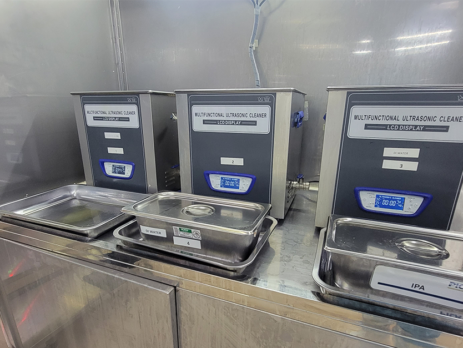
The production of Printed Circuit Boards (PCBs) and Flexible Printed Circuits (FPCs) encompasses chemical, mechanical, and printing processes that often result in the accumulation of unwanted residues on their surfaces. The presence of even minuscule contaminants can significantly affect the functionality, performance, and reliability of the final products....

4 factors that can cause voiding in Ball Grid Arrays (BGA)

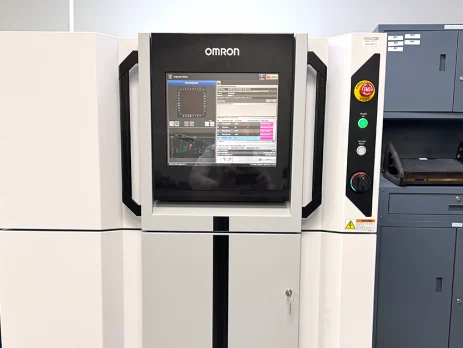
Ball Grid Arrays (BGAs) are crucial components widely employed in the electronic manufacturing industry owing to their compact size. However, due to their high density, detecting defects through visual inspection alone can be challenging, while destructive testing poses the risk of compromising voiding defects.X-ray inspections offer a non-destructive testing...