
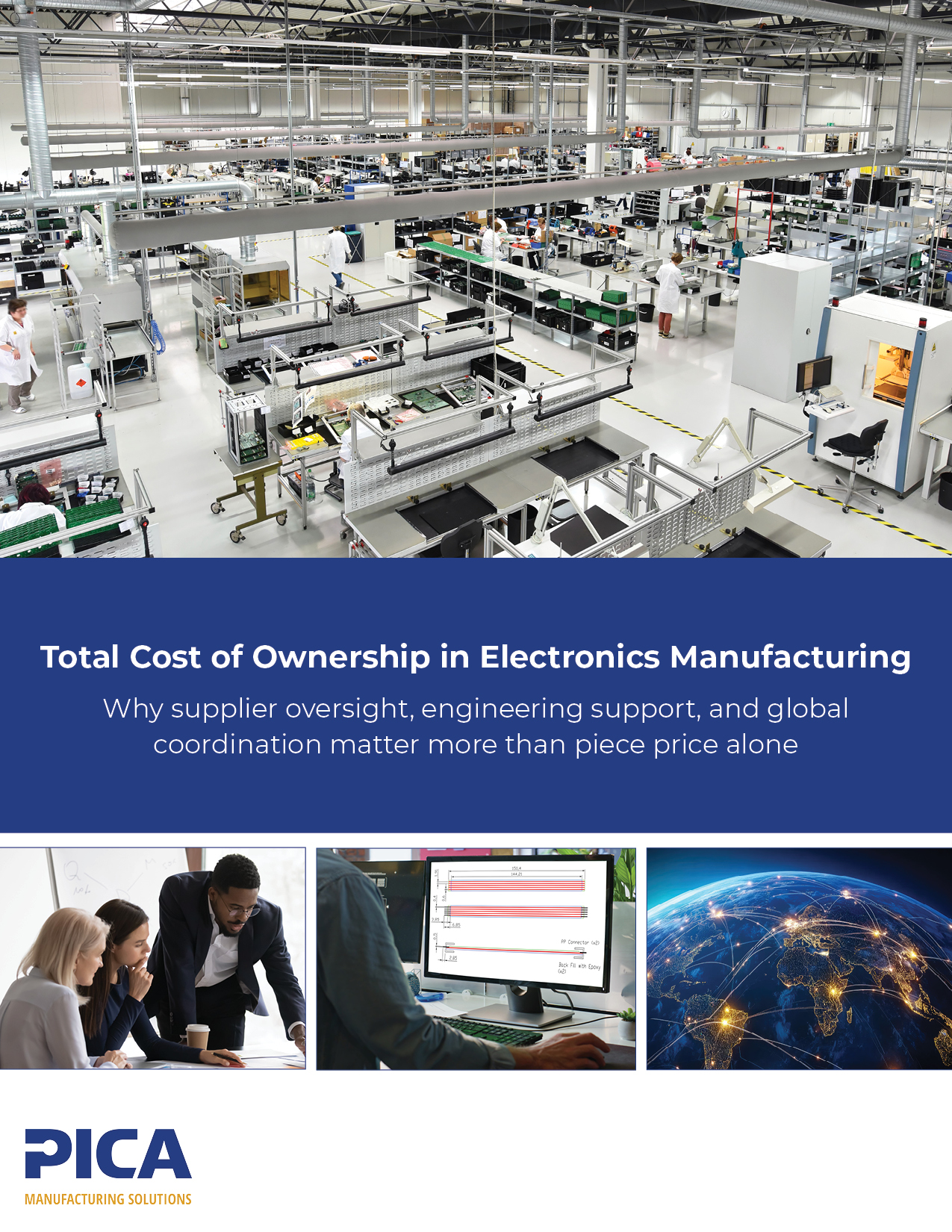
Total Cost of Ownership
The lowest manufacturing quote may not deliver the lowest total cost.
Learn how engineering support, supplier qualification, quality oversight, logistics, communication, and supply-chain resilience affect the true cost of electronics manufacturing.
Download the Total Cost of Ownership white paper to learn how PICA applies a coordinated manufacturing model beyond quoted piece price.

Lower Hidden Costs
Stronger Supply Chain
Less Internal Burden

Better Execution
Look Beyond the Quote
Total Cost of Ownership

Cost of the Parts
Hidden Costs
- Transportation & Logistics
- Inventory Carrying Costs
- Quality & Rework
- Procurement
- Operations Downtime & Expediting
- Customs, Tariffs & Compliance
- End of Life & Obsolescence
The Complete Picture
Seven Factors That Shape Total Cost of Ownership

One Coordinated Manufacturing Model
PICA Manages What Lies Below the Quoted Price
PICA serves as a single point of contact for engineering support, supplier qualification, quality oversight, manufacturing coordination, logistics, and supply-chain continuity. Talk with our team about how we can manage the responsibilities below the quoted price and provide a more coordinated path from design through delivery.
Partner Qualification
How PICA evaluates manufacturing partners
PICA evaluates manufacturing partners using more than quoted price alone. Quality, delivery performance, engineering support, responsiveness, technical capability, and cost are reviewed together to determine the best manufacturing fit for each program.
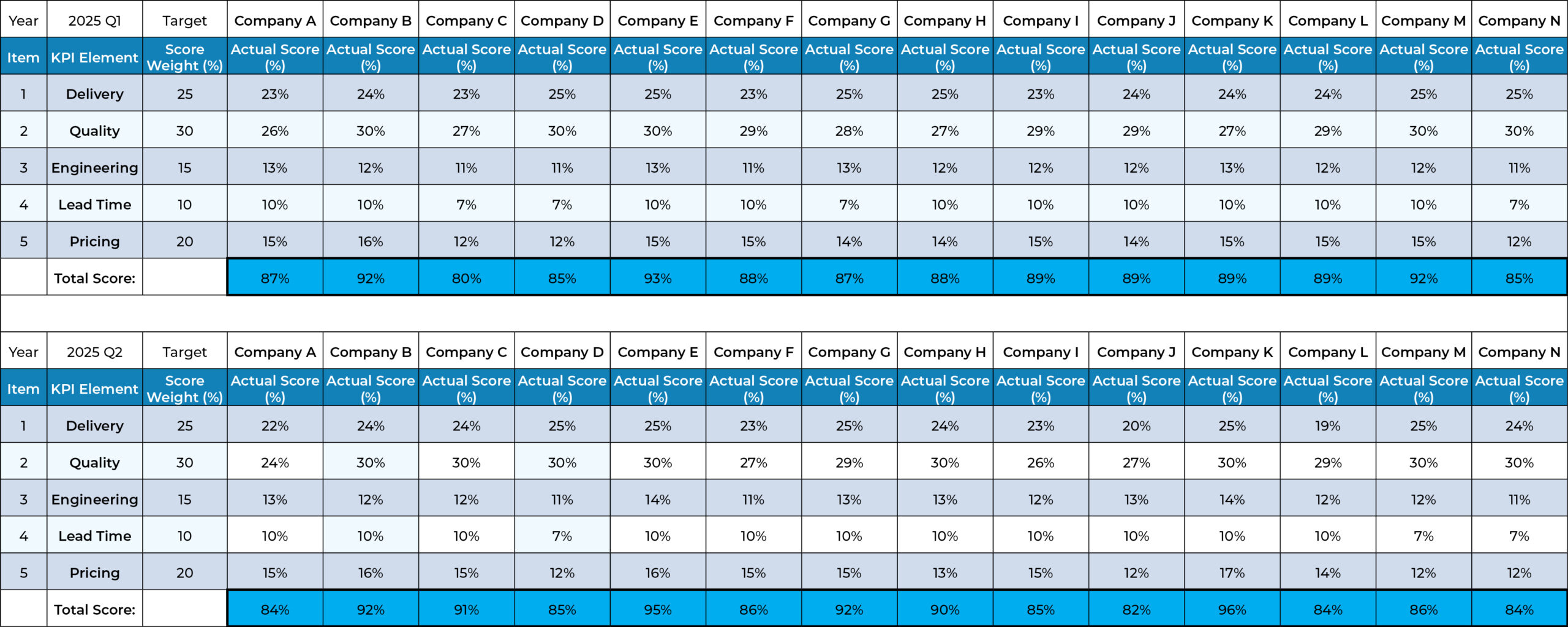
Individual Partner Performance
Manufacturing partners are evaluated across quality, delivery, engineering support, responsiveness, and pricing to identify strengths, gaps, and ongoing improvement needs.
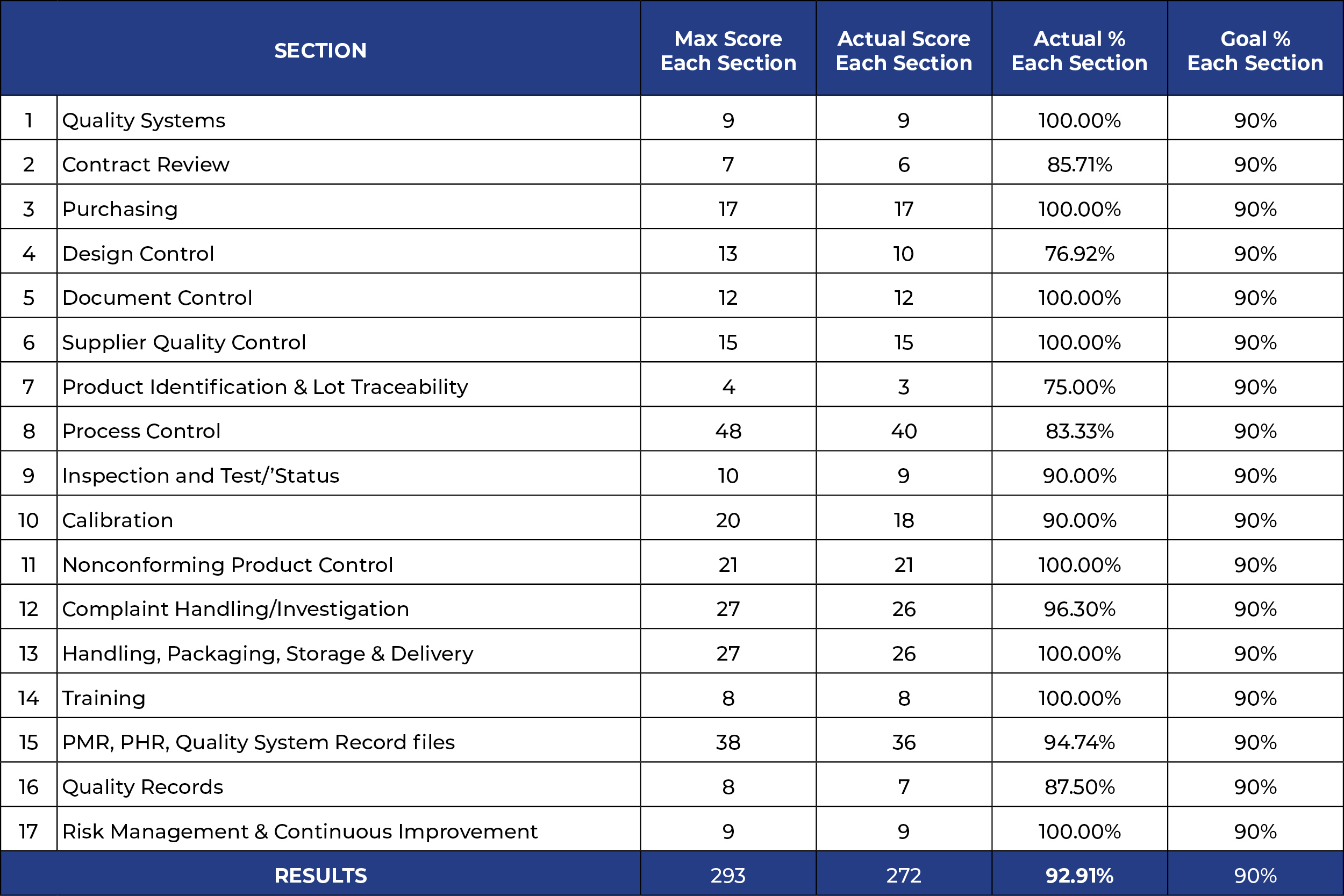
Overall Facility Qualification
PICA also evaluates the facility as a whole, including technical capabilities, certifications, capacity, process controls, quality systems, and program fit before assigning manufacturing work.
Beyond Piece Price
Six responsibilities PICA manages for you
Supplier Qualification and Best-Fit Selection
PICA evaluates suppliers based on technical capability, certifications, production scale, engineering depth, quality systems, lead times, and geographic fit. Customers do not have to independently identify, audit, and manage multiple manufacturing sources.
Application Engineering and DFM
PICA provides early engineering support, material optimization, technology selection, and DFM guidance before production. This reduces the time and responsibility placed on the customer’s internal engineering team.
Quality and Supplier Oversight
PICA manages supplier scorecards, audits, corrective actions, process controls, and issue escalation. Rather than requiring the customer to monitor each factory independently, PICA provides coordinated oversight throughout the program.
Global Communication and Project Coordination
PICA serves as a central point of contact across manufacturing, engineering, quality, and logistics teams. This reduces the need for customers to manage different factories, time zones, languages, and escalation paths.
Logistics, Inventory, and Landed-Cost Management
PICA coordinates tariffs, duties, inventory, warehousing, expediting, and delivery planning. These responsibilities are managed as part of the program rather than left for the customer to coordinate separately.
Supply Continuity and Risk Management
PICA supports geographic flexibility, qualified backup sources, transfer readiness, and documented process knowledge. This reduces the customer’s responsibility for contingency planning and lowers exposure to supply disruption.
PICA takes ownership of the engineering, supplier-management, quality, communication, logistics, and risk-management responsibilities that exist beneath the quoted price. The result is less internal workload, faster issue resolution, greater visibility, and a more resilient manufacturing program.
Talk with a Specialist