
Printed Circuit Boards (PCBs)

Printed Circuit Boards (PCBs)


Product/Tech Description
  • 0
  • September 1, 2023
Hello, world!

Printed Circuit Boards / PCBs

Custom Printed Circuit Boards Engineered for Performance

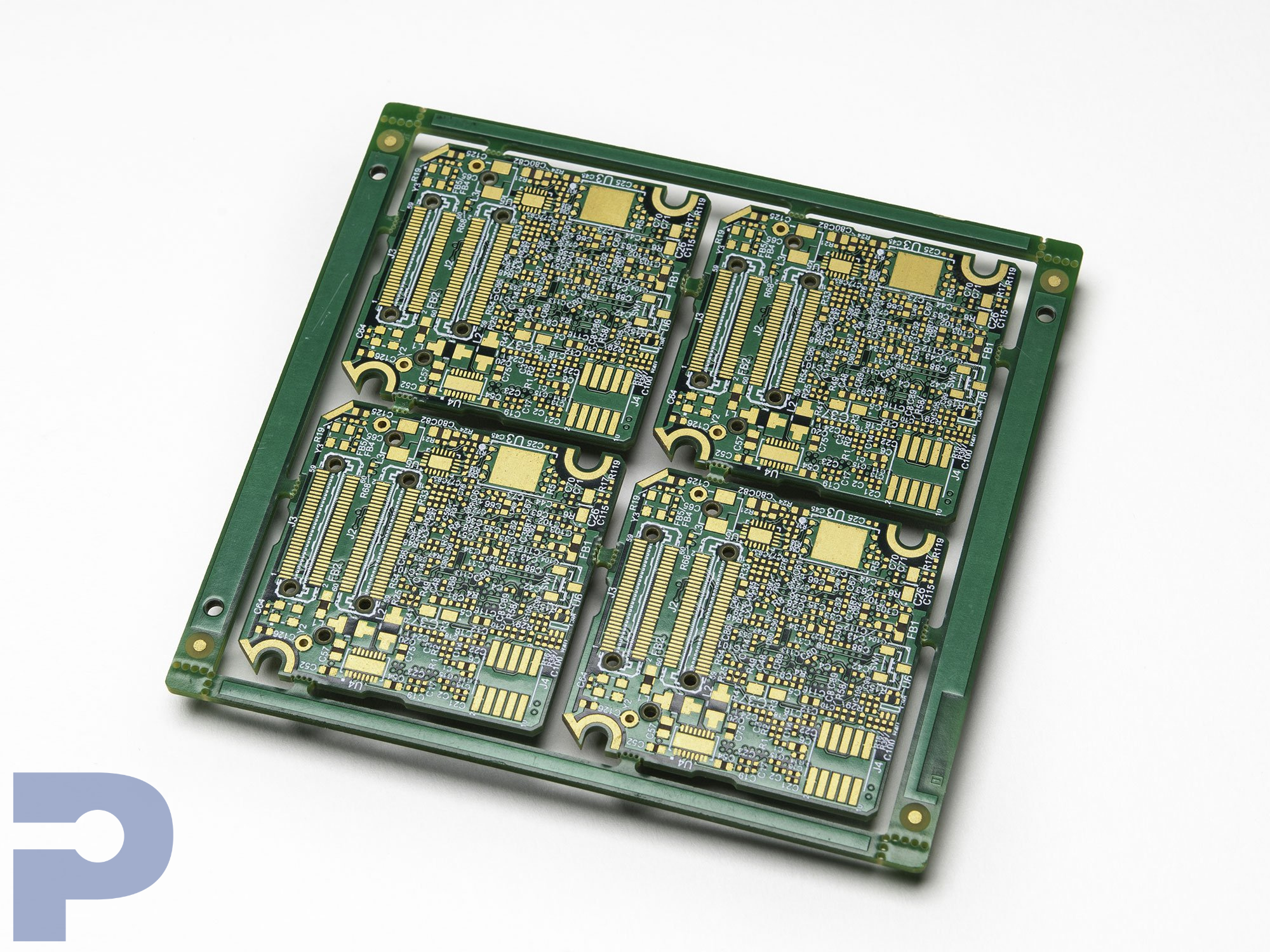
PICA designs and manufactures printed circuit boards (PCBs) that deliver precise, reliable performance across industries. From early-stage prototypes to high-volume production, our team provides scalable PCB fabrication backed by stringent quality control and responsive engineering support.

Trusted in medical devices, industrial automation, communications, wearables, and automotive systems, PICA PCBs are built to meet demanding requirements for signal integrity, durability, and manufacturability.

Why Choose Printed Circuit Boards from PICA?

  • Proven Reliability – Stable boards produced under strict quality standards.

  • Cost-Effective Options – Single-sided and double-sided PCBs for straightforward applications.

  • High-Density Interconnects – Multi-layer and HDI designs for compact, high-performance systems.

  • Design Optimization – Engineering support for stack-ups, materials, impedance, and thermal management.

  • Scalable Production – Fast prototypes and high-volume builds with global logistics.

PCB Capabilities – Highlights

PICA offers full end-to-end PCB manufacturing with advanced processes and materials:

For more technical information on PICA’s Printed Circuit Boards capabilities, click the button below.

Benefits of Printed Circuit Boards / PCBs

Consistent Quality
Every board is manufactured under strict process control for long-term reliability.

Design Flexibility 
Options from simple single-sided PCBs to advanced multi-layer HDI structures.

Faster Time-to-Market 
Quick-turn prototyping and scalable production help you launch products faster.

Optimized Performance 
Engineered for signal integrity, thermal stability, and durability in demanding applications.

Global Manufacturing Advantage
U.S. and Malaysia facilities provide cost-effective production with local support.

Markets We Serve with Printed Circuit Boards / PCBs

Consumer Electronics: 
Powering compact devices like smartphones, tablets, and wearables with lightweight, space-saving designs.

Medical Devices: 
Used in pacemakers, hearing aids, implants, and diagnostics where flexibility and reliability are critical.

Automotive:
Built into control modules, lighting, and infotainment systems to withstand vibration, heat, and irregular layouts.

Industrial Equipment: 
Trusted in robotics, sensors, and control systems for durability in harsh environments.

Defense & Security:
Essential in satellites, missiles, and avionics, combining lightweight efficiency with extreme durability.

See What You Can’t See: AOI & X‑Ray Inspection in PCB Assembly

In today’s electronics world, component densities are rising, geometries are shrinking, and reliability expectations are higher than ever. Failures at...
Designing for Edge-Mounted PCBs: Best Practices and Considerations

When space is tight, or when PCBs need to mate with enclosures, panels, or external interfaces, edge-mounted boards can offer...
Mastering Thermal Management in PCB and Flex Circuit Design

As electronic devices become more compact and powerful, managing heat effectively is critical to ensuring performance, reliability, and long product...
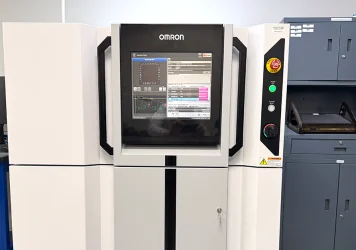
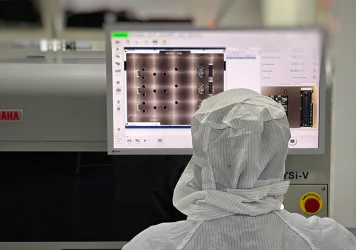
An image illustrating the process of Automated Optical Inspection (AOI) in printed circuit board (PCB) and flexible circuit manufacturing. The AOI system utilizes high-resolution cameras and advanced lighting to detect defects such as missing components, solder bridges, and misalignments on PCBs. This non-contact inspection method ensures high accuracy and efficiency in quality control

Why AOI and Quality Control Matter in PCB and Flex Circuit Manufacturing

Why AOI and Quality Control Matter in PCB and Flex Circuit Manufacturing When it comes to PCB and flex circuit manufacturing,...

An infographic illustrating the key manufacturing processes for Printed Circuit Boards (PCBs) and Flexible Printed Circuits (FPCs), including subtractive, semi-additive, and additive techniques. The image highlights the evolution of PCB manufacturing methods to support smaller devices, denser routing, and higher performance, emphasizing the importance of choosing the appropriate fabrication technique to improve impedance control, reduce copper waste, and meet the demands of modern miniaturized electronics.

Guide to PCB & FPC Manufacturing Processes

This blog is an excerpt from the white paper Guide to PCB & FPC Manufacturing Processes: Subtractive, Semi-Additive & Additive...

An infographic illustrating key design considerations for high-voltage printed circuit boards (PCBs), including trace spacing, creepage distance, and material selection, to ensure safety and reliability in high-voltage applications. This image is featured in PICA Manufacturing Solutions' blog post, which provides essential layout and material considerations for designing high-voltage PCBs. The post emphasizes the importance of understanding clearance, creepage, and working voltage to prevent arcing and ensure compliance with safety standards. It also discusses best practices such as widening trace spacing, using slots to improve creepage, selecting materials with high Comparative Tracking Index (CTI), and adding conformal coatings for extra protection. Additionally, the post highlights thermal and mechanical considerations to maintain insulation performance over time.

Designing High Voltage PCBs: Key Layout and Material Considerations

When working with high-voltage circuits, design priorities shift. While many PCBs focus on high-speed signaling, impedance control, or component density,...

A detailed illustration of a 6-layer printed circuit board (PCB) stackup, showcasing the arrangement of copper and dielectric layers. The stackup includes: Altium, JLCPCB, Top, Signal Layer, Ground Plane, Inner Signal Layer, Power Plane, Inner Signal Layer, Bottom Signal Layer, This configuration is commonly used to enhance signal integrity and reduce electromagnetic interference (EMI) in complex electronic designs.

Understanding Prepreg and Core Dielectrics in PCB Stackups

In multilayer PCB fabrication, what connects copper layers together isn’t just glue—it’s carefully engineered dielectric materials that control signal...

An illustration depicting the V-scoring process in printed circuit board (PCB) manufacturing. The image shows a V-shaped groove cut into a PCB panel, facilitating the separation of individual boards after assembly. This method is commonly used in high-volume production to enhance efficiency and reduce costs

Choosing the Right PCB Separation Method: V-Scoring, Routing, and Die Cutting

Printed Circuit Board (PCB) manufacturing involves precise processes, not just in design and component assembly but also in how the...

Request Your PICAKit Today

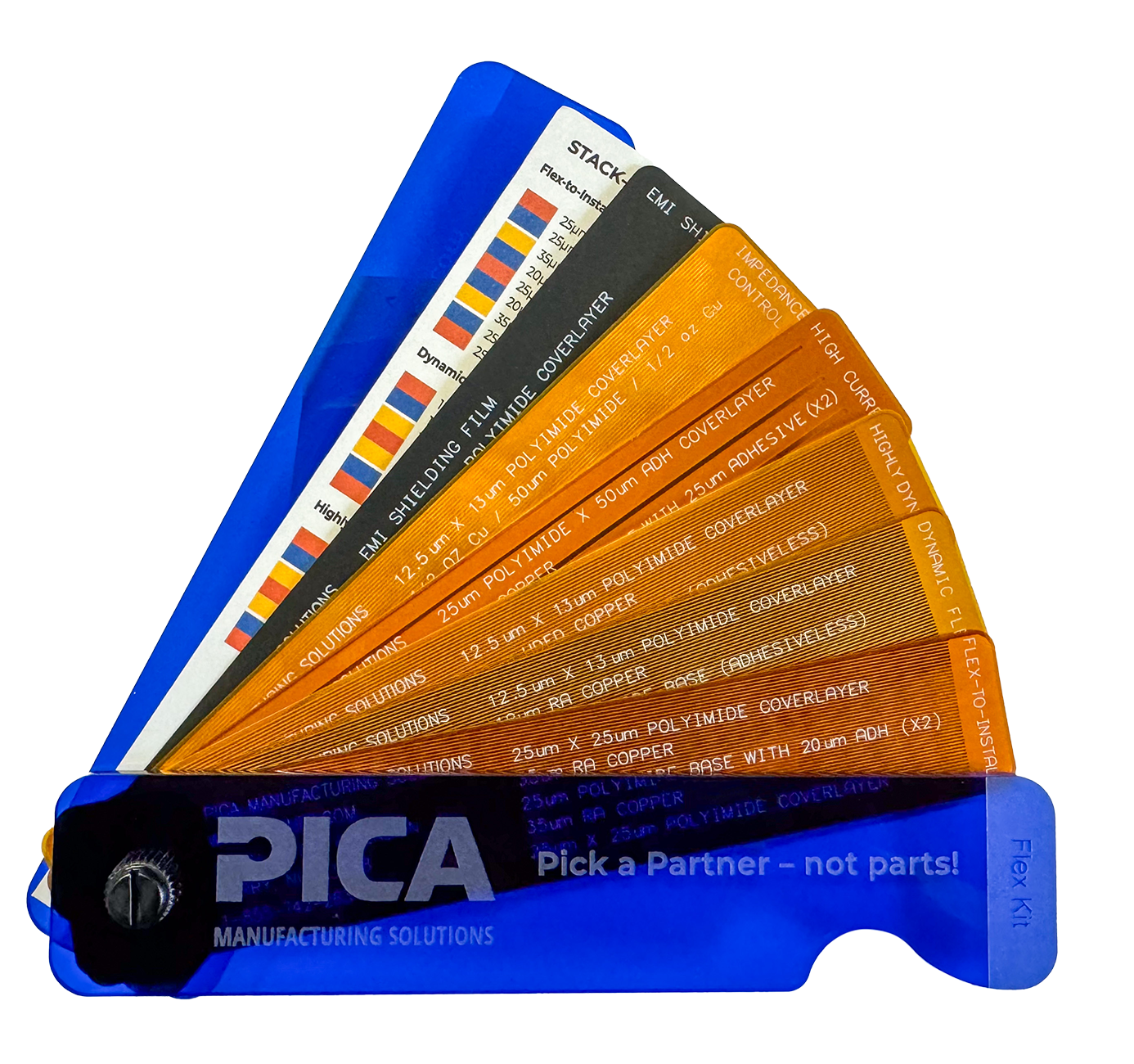
We want you to take a look at what we can produce for you by offering you a PICAKit which includes a variety of flexible pcb, shields, & flat flexible cables.

PICA Manufacturing Solutions PICAKit, showcasing the company's product kit designed for flexible and rigid-flex PCB applications
This site is registered on wpml.org as a development site. Switch to a production site key to remove this banner.